
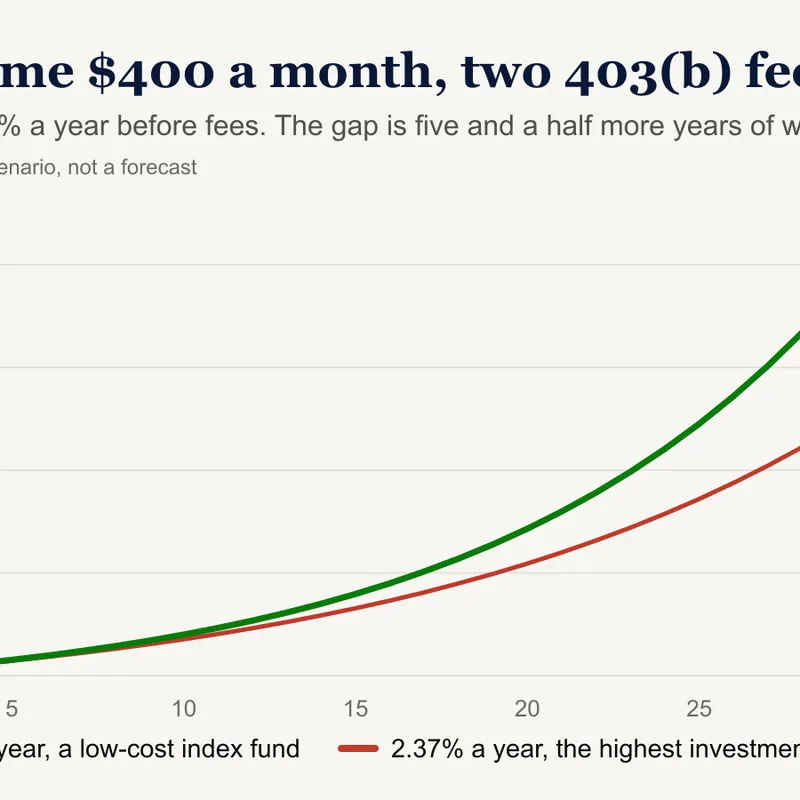
403(b) Retirement Plan: How One Fee Can Add 5½ Years of Additional Work
I used to sell 403(b) annuities to teachers, but not anymore. What I learned to do and what NOT to do could save you years off your retirement date.
20 min read

Should you get out of the stock market? Only if you have a tested system to get out and back in.
Most people ask that after the crisis is full blown, and the top answers on Google all tell you to stay invested. I’ve watched what happens to the people who can’t. In 2012 I met a couple who had sold everything in October 2008. Stocks, bonds, 100% to cash. Years later they were still holding that cash, afraid to get back in, almost like the market was watching them. Ready to steal their money a second time.
If that sounds like you, you shouldn’t feel bad. It’s not like you’re born with this information: what to buy, when to buy, what to sell, when to sell. I learned it over a career in this industry, and most people don’t have the time or the math background.
You need a process you set up when the skies are clear and the seas are calm, one that tells you when to get out and when to get back in. Mine is the Refined FI Risk Monitor, live since 2005. $100,000 that followed it from January 2005 grew to $1.47 million by October 2026, against $963,000 for buying and holding the S&P 500. Its worst fall was 34%. Buying and holding fell 55%. And most of the time, its recommendation is hold your current investments.
You’ve probably heard the warning. Miss the market’s 10 best days and your returns get cut in half. It’s true. What it leaves out is when those days happen.
The best days and the worst days show up together, in the same stretch of high risk. Take the 10 best days for the S&P 500 since January 2005. Nine of them came while the market was already down 20% or more from its high, in the middle of the 2008 and 2020 crashes. The biggest one, October 13, 2008, was a 14.5% gain on the Monday after a week that took the market down almost 20%.
So if you’re out of the market for the storm, you miss the best days. You also miss the worst ones.
| $10,000 in the S&P 500, January 2005 to October 2026 | What it grew to |
|---|---|
| Held every day | $96,276 |
| Missed the 10 best days | $41,776 |
| Missed the 10 best and the 10 worst days | $98,610 |
Skipping both beat holding. The catch is you never know how deep a pullback is going to go while you’re in it. So you need a rule that’s been tested and traded live.
When a good rule tells you to get out, it doesn’t look like you should. It looks like a normal pullback. And when it tells you to get back in, it looks like the worst isn’t over yet.
In April 2009 my Risk Monitor told me to get back in, and the news sounded like the world was going to end. In January 2023 it happened again. Inflation didn’t look finished, and it felt like the market had another leg down. I followed the process both times.
Your fight-or-flight instinct is built to protect you, and in a market it works backwards. By the time you feel like everything’s better, you’ve already missed the recovery. The couple I met in 2012 were still waiting. That’s why the call has to come from data, not from the news and not from how you feel that week.
There’s no system that gets you out at the top and back in at the exact bottom. That only works in fantasy land.
You’re going to feel the edges of the storm, coming in and going out. In testing, the Risk Monitor gave a false alarm in 2001. It said get in, then said get back out within weeks. That happens. What you’re trying to do is sidestep the big storms, the ones that set you back a decade.
From 1966 through 1981, sixteen years, the S&P 500 lost 14.5% after inflation, even with every dividend reinvested. Nobody living through it knew it would last that long.
A rule also has to be one you can live with. Since 2000 the 200-day moving average said sell 18 times, and 14 were false alarms: it sold, and bought back in higher. I tested it in how to protect your 401(k) from a market crash. Over the same years the Risk Monitor said sell 12 times, and 7 were false alarms. Since it went live in 2005 it has stepped out six times, and the two that paid were 2008 and 2022. A rule you quit after five false alarms isn’t there for the one that pays.
The $1.47 million record up top leans conservative. It assumes your cash earned nothing while you were out, and that every move happened at the next day’s close, since the alert lands after the market shuts.
Start with your biggest accounts first.
Your joint brokerage account, your individual account, maybe a trust. If what you hold there has gone up, selling means paying tax on the gain. So ask yourself one question before you sell: how much of that gain are you willing to give back to the market? 25%? 50%? All of it, until you’re back to what you paid? Are you willing to let all your gains turn into a loss?
It’s a question I find people never think about. When I ask clients, their first answer is that they don’t want to pay any tax. Then they see they’d be giving up tens of thousands of dollars to avoid it.
Once you know your number, you can put it in place with a stop loss order: an order that sells automatically if the price falls to a level you set. Mark it good till canceled, so it stays in place until you remove it, and let it do its thing. If the market falls that far, it gets you out and you keep the gain you decided to keep. Just make sure to update this order if the market keeps going up.
Don’t let the tax tail wag the profit dog. You pay tax on part of a gain, never all of it. Protecting most of a gain beats giving the whole thing back. Live to fight another day.
Two people can read the same headline and come away with opposite fears. Since 1928 the S&P 500 has had down years and big up years under presidents of both parties.
How you feel about the news doesn’t change the odds. Since 1928 the S&P 500 has had a down year about one year in four. You are more likely to have a +20% or more year than a down year. It’s true!
That’s why the answer is usually to do nothing. Hold your portfolio. Act only when the data says so, and when it says get out, know the day you’ll get back in.
Only if a rule you set before the headlines tells you to, and only if that rule also tells you when to get back in. Since 1928 the S&P 500 has had a down year about one year in four, so most of the time the right move is to hold.
Usually not all the way. At 70 you’re living off the money, so a big fall costs you more than it would at 40, when you’d have time to recover. Keep a retirement portfolio, and a tested rule for stepping out and back in.
Moving everything to cash only works with a tested rule for getting back in. Inside ten years of retirement, 30% in stable value is protection you set before anything falls.
Not inside a 401(k), IRA or HSA. In a regular brokerage account, selling an investment that’s gone up is taxed. Held over a year, the federal tax on the gain is 0%, 15% or 20%, depending on your income. Held a year or less, it’s taxed like your paycheck.
Know the day you’ll get back in before you ever get out.
Gold+ gives you the Risk Monitor, which checks the market every day and tells you when to get out and when to get back in. When it’s time to act, you get a text and an email. One tap opens your Refined FI portfolio: enter your balance and it shows the dollar amount for each holding.
Educational only, not investment advice. Historical indicators and returns do not predict future results.
I used to sell 403(b) annuities to teachers, but not anymore. What I learned to do and what NOT to do could save you years off your retirement date.
20 min read
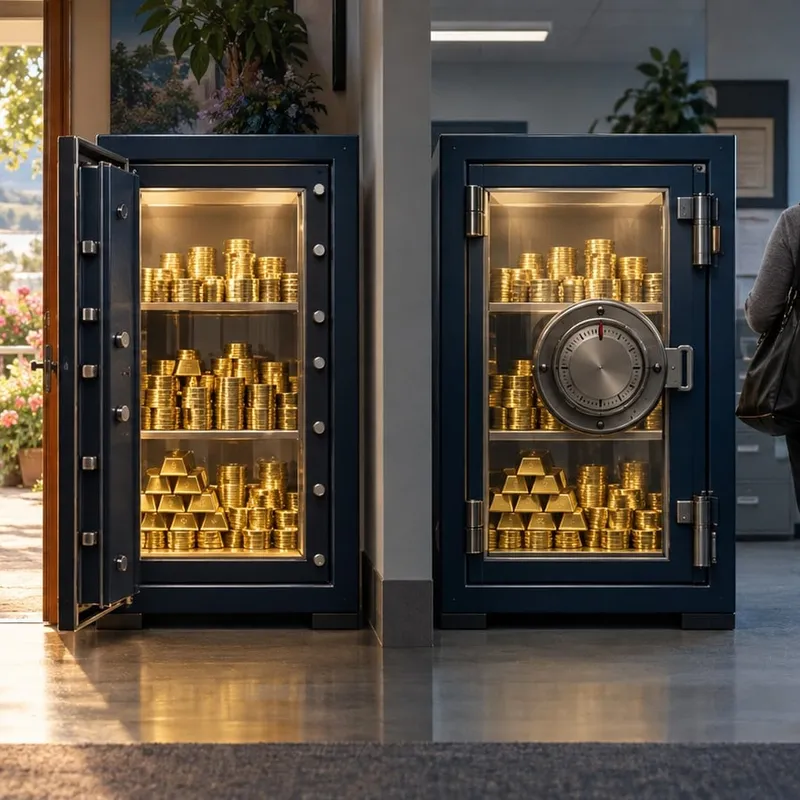
Two people can save the same money and end up with the same portfolio balance. One retires at 52. One has to wait until 59½. The only difference is which account the money went into.
23 min read
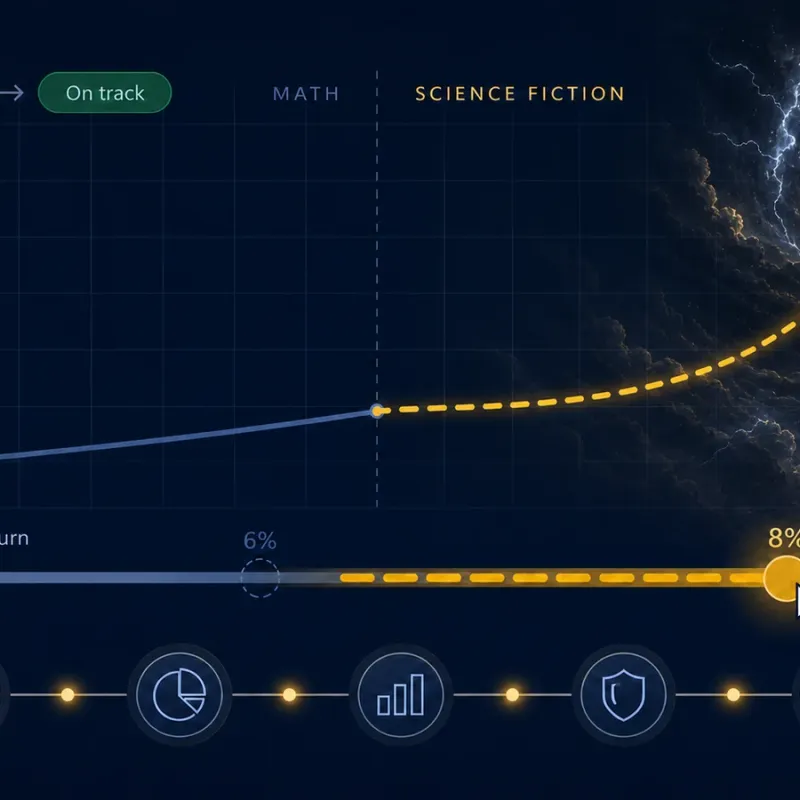
Understand what a retirement calculator should do and use a five-tool framework that turns each answer into your next retirement decision.
16 min read