
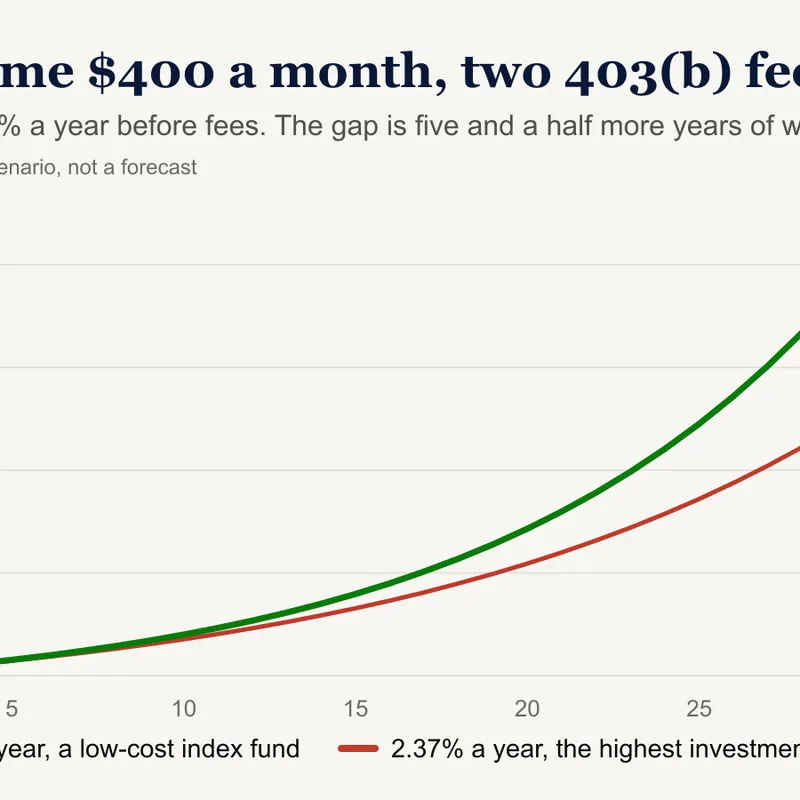
403(b) Retirement Plan: How One Fee Can Add 5½ Years of Additional Work
I used to sell 403(b) annuities to teachers, but not anymore. What I learned to do and what NOT to do could save you years off your retirement date.
20 min read

Key takeaways
You can have enough money to retire and still be scared to do it.
That fear makes sense. For most of your adult life, a paycheck has arrived every few weeks. You knew another one was coming. Retirement asks you to shut it off and trust that the money you saved will support a life that may last 20 or 30 years.
Nobody can tell you exactly what those years will bring. The market will fall again. Inflation will surprise us. A roof will need replacing. One person in a couple may live much longer than either expected. The fear and stress are real.
A projection built on average returns will not settle that fear. You need to see what happens when the assumptions go wrong.
A plan that is not stress tested is worthless.
Recently, I sat down with a relative to review their retirement accounts. Smart person, decades of saving, working with a reputable advisor. They had no plan for where the next dollar should go, no plan for a 20% market drop in their second year of retirement, and no way to tell whether their fees bought anything useful.
That is why I built Refined FI. It gives you professional tools, a more robust portfolio, and a Risk Monitor so you can test the plan and keep checking it after you retire.
No portfolio or tool can make retirement certain. A tested system can show what your plan can take before you give up the paycheck.
A lot of retirement advice answers that question with the 4% rule. Take 4% of the portfolio, add Social Security and any pension, and see whether the total covers your spending. It is a useful reference point. It is not your retirement plan.
Your spending, retirement date, Social Security, pension, savings, taxes, portfolio, and lifespan all belong in the answer.
Start with what actually leaves your bank and credit-card accounts each month. A retirement spending target starts with what you spend now, not a percentage of your salary.
Then run the Retirement Number Calculator. It subtracts Social Security and any pension first, shows what the portfolio has to cover in today’s dollars, and compares the number you need with what you are projected to have.
If you are already withdrawing from the portfolio, test how long the money may last at your current spending and allocation.
If the number comes up short, now the problem has a size. Check the portfolio first. Run the calculator with what you own, then compare it with a portfolio aligned to your retirement stage. If the change closes the gap, it does so without asking you to save another dollar.
After the portfolio is doing its job, the remaining choices are the familiar ones: save more, work longer, or spend less. None is painless, but each can be tested. Work through the repair order one lever at a time.
All this comes back to time. Every improvement to the plan is time that you don’t have to spend working. The last thing you want is to be wearing a blue smock and greeting people when you’re 80.
Finding your number estimates what happens under the assumptions you entered. The next test is what happens when those assumptions stop cooperating.
Retirement is not lived as a 30-year average. It is lived one year at a time. A bad market in year two matters more than the same bad market in year twenty-two because early withdrawals come out of a smaller balance and leave less money to recover.
It also feels different. Watching an account fall while a paycheck still arrives is one thing. Watching it fall while groceries, insurance, and property taxes are coming out of that same account is another.
Choose a decline large enough to make you question the plan and run the number again. Start with 20%. It is a simple one-fifth cut, not a prediction that every holding will fall by the same amount. If you have $800,000, enter $640,000. Now you can see whether a large early decline changes the retirement decision.
Then put the actual allocation through the free Portfolio Stress Test. It shows what the portfolio would have done through the Great Depression, the inflation and weak markets of the 1970s, the dot-com bust, and 2008.
The result shows which past market hurt the portfolio most, whether the retirement still holds, and what part needs to change.
Most portfolios I reviewed over my career were a mishmash. A fund left in an old 401(k), a stock that did well once, foreign stocks bought in the name of diversification, a bond fund nobody could explain. Many lines on a statement can look safe without preparing the portfolio for the job retirement asks it to do.
A retirement portfolio needs every holding to do a job. Depending on your stage, those jobs include growth, income, stability, and protection against inflation. An investment that does none of them is not harmless. It is wasted capital.
More robust does not mean more complicated. It means the portfolio is aligned with what the money has to do now. Someone with 15 years left to work needs a different portfolio from someone who will start withdrawing next year. Someone already retired needs the portfolio to distribute income and survive difficult markets. That is the difference between collecting investments and building retirement income.
The Stress Test will not promise that the next decline looks like the last four. It gives you evidence. If the plan breaks, you can change it while the problem still exists on a screen.
The most dangerous part of a bad market is not always the decline. It is being forced to make a decision while every headline says the future is getting worse.
In 2012, I met a couple who had sold everything in October 2008 and were still in cash years later. They had a way out, but no tested rule for getting back in.
A retirement plan needs both rules. What evidence would make you reduce risk? What evidence would tell you to add it back? If the answer is a feeling, fear gets the final vote.
You can check the public evidence yourself. Stock Market Warning Signs shows whether stocks, bonds and gold are moving together, plus the latest inflation reading. Knowing what to do with those readings takes a tested rule.
This is the job of the Refined FI Risk Monitor. It checks multiple market-risk inputs daily and combines them into one of three instructions: Stay the Course, Reduce Risk, or Add Risk. Most days require no change.
The Risk Monitor will not identify every market top, prevent every loss, or trade your accounts. Following an instruction may mean reducing risk before a decline that never arrives, which may mean missing some upside. Diversification and allocation changes can reduce risk, but they cannot guarantee against losses.
You get a process set in calm conditions to follow when conditions are not calm. See how the Risk Monitor works.
The free calculators let you run every test in this article. Gold+ includes the Refined FI portfolios, repeatable planning tools, and the Risk Monitor. See the Plan, Portfolio, and Protection system.
You make every change in your own accounts. Gold+ does not manage money or place trades.
A retirement plan is not a three ring binder you read once and put on a shelf. It is a set of assumptions about your life. When your life changes, the answer can change.
Retest when your retirement date, spending, Social Security, pension, savings, contributions, or portfolio changes. Retest after a large market decline. Retest whenever the old answer no longer feels like it describes your life.
Keep the old result. Compare it with the new one. You want to see what changed, how much it moved the answer, and whether it changed the decision.
If the number works and the bad-market tests hold, start getting your ducks in order. You may be ready to pull the plug. It will still feel like a large decision because it is one.
If the plan fails, use a little more belt and suspenders. Work longer, spend less, improve the portfolio, or use part-time work to make the first years easier. Then test it again.
Run the number. Cut the portfolio by 20%. Put it through the bad markets. Decide what you will do before the headlines get loud. Save the result and run it again when life changes.
Confidence comes from knowing you are okay even when things look bad.
Retirement replaces a visible paycheck with a plan that has to survive an unknown lifespan, changing spending, inflation, and bad markets. The fear is not proof that the plan is bad. It is a reason to test the plan before you depend on it.
Run your retirement number with the inputs you can defend. Run it again with current savings reduced by 20%. Then use the Portfolio Stress Test to put the actual allocation and withdrawal need through the Great Depression, 1970s stagflation, the dot-com bust, and 2008.
Check whether the portfolio fits your retirement stage first. Then test saving more, retiring later, spending less, or using part-time income. Change one input at a time so you can see which move repairs the plan.
Retest whenever retirement timing, spending, income, savings, contributions, or portfolio allocation changes. Run it again after a large market decline or whenever the old result no longer gives you confidence.
The Refined FI Risk Monitor checks multiple market-risk inputs daily and combines them into one of three instructions: Stay the Course, Reduce Risk, or Add Risk. Most days require no change. It will not identify every market top, prevent every loss, or trade your accounts.
This article is for educational and informational purposes only and does not constitute investment, financial, tax, or legal advice. Refined FI is not a registered investment advisor. All investing involves risk, including possible loss of principal. A calculator result is an estimate based on the inputs and historical return data, not a guarantee.
I used to sell 403(b) annuities to teachers, but not anymore. What I learned to do and what NOT to do could save you years off your retirement date.
20 min read

Two people can save the same money and end up with the same portfolio balance. One retires at 52. One has to wait until 59½. The only difference is which account the money went into.
23 min read
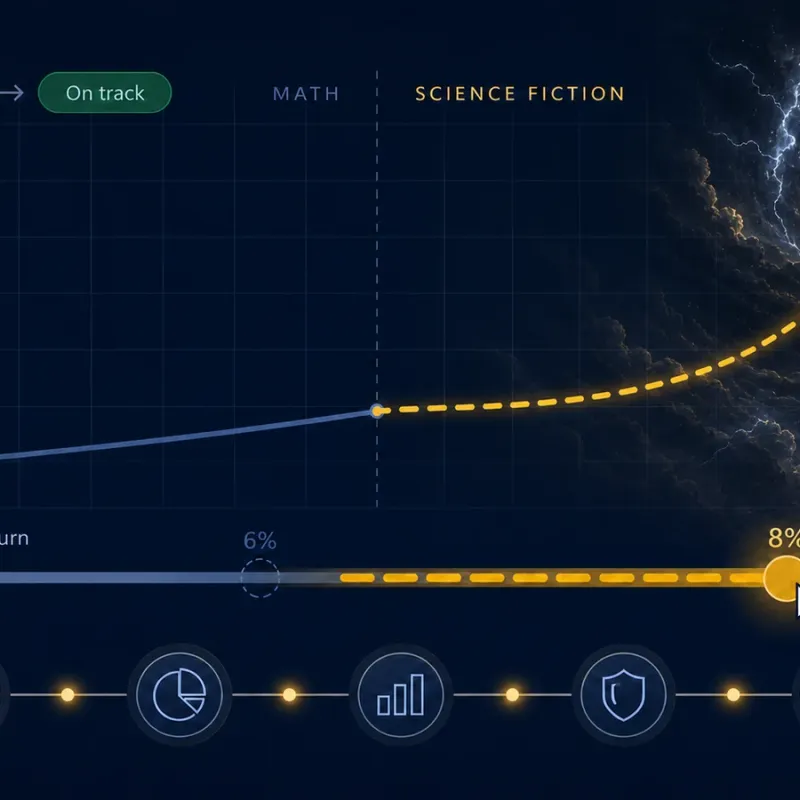
Understand what a retirement calculator should do and use a five-tool framework that turns each answer into your next retirement decision.
16 min read